

What Australia's New Nursing Workforce Strategy Means for UK Nurses Moving Down Under
First-ever National Nursing Workforce Strategy
On 6 August 2026, Federal Health Minister Mark Butler released Australia's first-ever National Nursing Workforce Strategy: the product of three years of consultation with nurses, health services, educators and government. It's the first time Australia has had a single, nationally agreed plan for how it grows, supports and sustains its nursing workforce, and it lands at a moment when the pressure on that workforce is impossible to ignore.
At Aulive, this is the news we've been waiting for. It puts a national policy voice behind exactly the problem we've spent the last several years quietly solving, one placement at a time.
Australia's nursing shortage, by the numbers
Nursing is already Australia's largest health profession, making up more than 40% of the entire health workforce. Even so, the Strategy is blunt about where things are heading: without action, Australia faces a shortfall of around 80,000 nurses by 2035, with aged care alone short by an estimated 18,700 nurses in the same period. Add an ageing population, rising chronic disease, and growing demand across aged care, primary care and mental health, and the maths only gets harder.
The Australian College of Nursing's response to the Strategy made an important point that echoes what we hear from our hospital partners every week: this isn't only a recruitment problem, it's a retention one. Getting nurses into the system is only half the job, keeping them there, supported and practising at the top of their scope, is the other half.
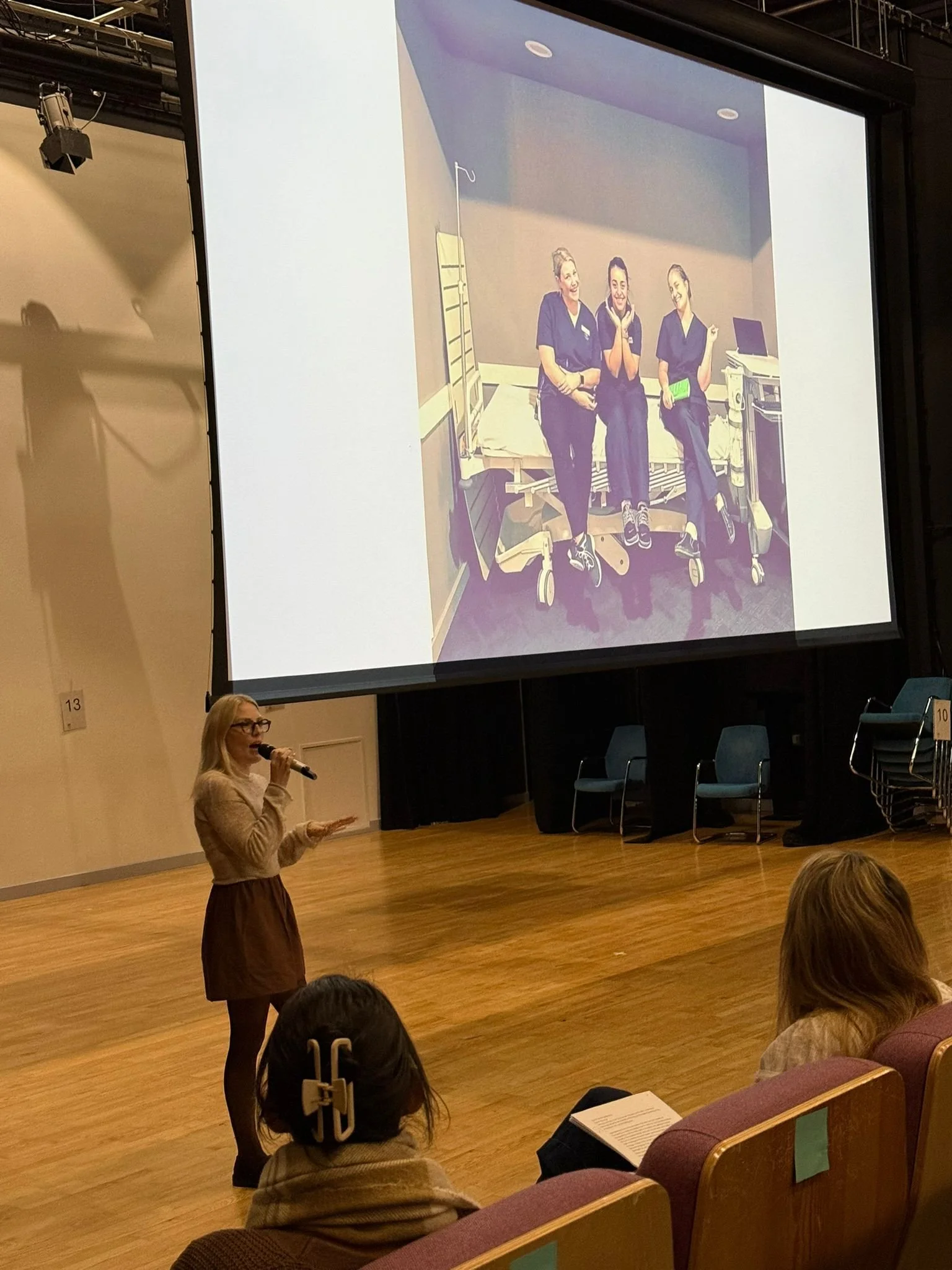
“Olivia speaking to student midwives about the profession. on screen, three Australian midwives she's personally mentored. Strong leadership and mentorship pathways are exactly what the new National Nursing Workforce Strategy is calling for, and it's something Aulive has always believed starts well before a placement does.”
What The Strategy Actually Prioritises
The Strategy sets out four national priority areas:
Enhancing workforce planning, education and regulation: better data, smoother career mobility, and wider access to nursing education.
Enabling nursing innovation: new funding models, nurse-led care, and nurses working to their full scope of practice.
Elevating the nursing profession: stronger leadership pathways, anti-racism action, and, notably, dedicated support for internationally qualified nurses transitioning into the Australian system.
Delivering a sustainable workforce: national skills matrices, clinical-academic career pathways, and expanded pathways into rural and remote nursing.
Two of these, elevating the profession through support for internationally qualified nurses, and building a sustainable workforce through structured transition pathways, describe, almost word for word, the work Aulive already does every day. AHPRA registration support, visa assistance, and post-placement pastoral care aren't add-ons to our service; they're the practical answer to the exact transition barriers this Strategy identifies as a national priority.
What It Means If You're a UK Nurse or Midwife Considering Australia
If you're a UK-trained nurse or midwife weighing up a move to Australia, this Strategy is a strong signal that the system is actively preparing to welcome you, not just tolerate the paperwork that comes with you. Investment in smoother transitions for internationally qualified nurses means the road from NHS to AHPRA registration is only going to get better supported, and Aulive is already built to walk that road with you, from your first conversation through to life on the ward (or in the birthing suite) in Australia.
What It Means For Our Hospital Partners
For the hospital and health service leaders we work with, the Strategy is confirmation that the workforce pressure you're managing locally is a recognised national challenge, and that a considered, well-supported international pipeline is now part of the official conversation, not a stopgap. With over 300 placements completed and a growing list of hospital partnerships across WA, VIC, SA and NSW, Aulive already operates the kind of ethical, end-to-end recruitment and retention model the Strategy is asking the sector to build toward: careful matching, full registration and visa support, and genuine pastoral care once a nurse or midwife has landed, because a signed contract is the start of retention, not the end of recruitment.
Where We Go From Here
A national strategy is a plan, not a guarantee, the real test will be implementation, funding, and the monitoring framework the sector is now rightly asking government to publish. But for the first time, there's a shared national roadmap that names international recruitment, structured transition support and retention as priorities rather than afterthoughts. That's the model Aulive has been building since day one.
If you're a hospital or health service thinking about how to close your nursing gap sustainably, or a nurse or midwife curious about what a move to Australia could look like, we'd love to talk.
📩 Get in touch via auliveltd.co.uk

Olivia Hill | Midwife and Founder Of Aulive Ltd
As the founder of Aulive, I get to witness professionals at a fundamental turning point of their life. A decision that, I know will better them and their career. I get SO excited every time an Aulive candidates decides to take the leap.